Postcard #4: The Aloha Life
- Nola Marley

- Oct 1, 2021
- 5 min read
Updated: May 5, 2025
The Aloha Life - Working on the North Shore of Oahu (Aug. 1st to Sept. 30, two months)
(Disclaimer: this blog was written a couple weeks prior to uploading. I’ve since left Hawaii, which I'll discuss in a later post. For now, enjoy!)
We’ve been working at Backpackers Hawaii, a hostel on the north shore of Oahu, since the beginning of August. We don’t quite feel like locals, yet we aren’t exactly tourists either. We’re working at a local business, buying groceries from a local grocery store, and are generally disgruntled with the drastic influx of tourists. Yet, this isn’t my legal address, I’m still living out of a backpack, and I have no intention of moving here permanently. I would say I’m mostly out of the honeymoon phase of living in paradise, but not quite enough to call it “home”. It’s an odd dynamic to talk to guests, who aren’t even aware of the giant centipedes, and the locals, who aren’t even afraid of the giant centipedes. I feel like I’m somewhere in between them, and therefore, neither.
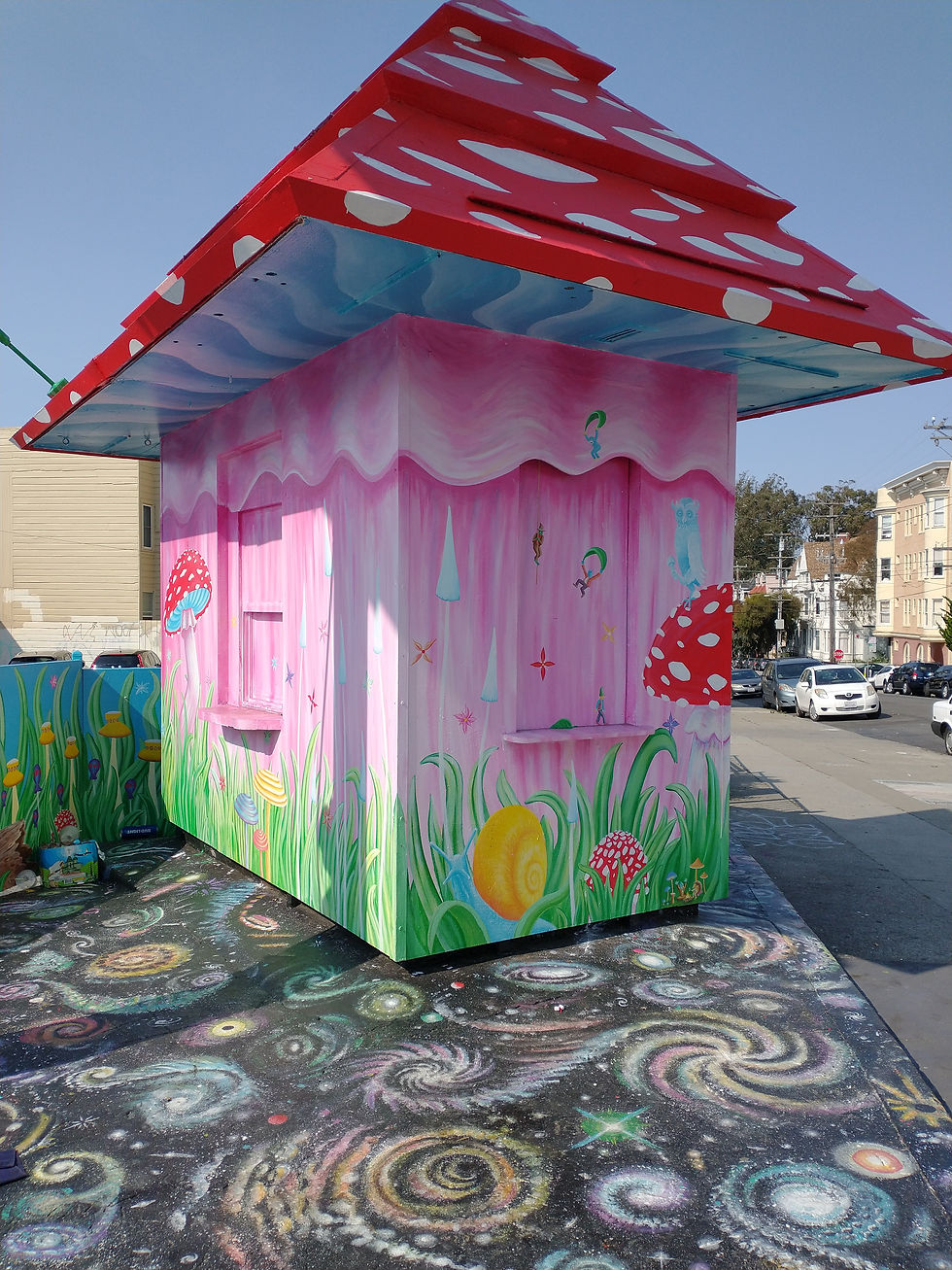
We’re living on the property in a 1940s plantation cabin that breathes unrestricted college student energy. The walls are covered top-to-bottom with acrylic murals, trippy paintings done by years of staff members like us. Things are routinely left out of place, broken, or just straight up dirty (mostly in our cabin, because, again, free-range college students. The guest cabins are all pretty neat though). There's a tiny sense of childlike chaos that happens to run free in the village. But I’ve come to think of it as a lesson I am in need of learning. How to be comfortable when things aren’t clean enough to my standards. My new friends are helping me get used to it. I feel I’m learning a lot more about Hawaii, and myself, than I had expected.
My best friend Tori called me this afternoon and told me she would be visiting Maui in a couple of weeks. I realized just how much I had to tell her about Hawaii. What I found I said does not paint the full picture of life here (a subject I am still a novice at myself), so I’ve come here to do some more explaining.
I’ve seen how beautiful and surreal the mountains and the beaches are. I’ve seen just how loving and generous the people are. I’ve felt the heat and the humidity, the sea salt and the sand. I’ve seen the Aloha lifestyle. I’ve noticed how business oriented the government is, particularly when it comes to the tourism industry. I’ve seen people stealing chickens and ulu off the farm, I’ve seen houseless camps set up in the crevices of the mountains, which are climbed by the hikers who are staying at 5 star hotels. I’ve seen what is and isn’t Hawaii. All I can really say is that your experience here will be what it will be. Hawaii is what you make of it. You can be fed the Sheraton continental Hawaii, or you can taste the real thing, but it’s up to you to find it.
I’m not trying to gatekeep Hawaii either. The tourism industry really wants you to experience their overpriced, palatable, gentrified version of Hawaii. You can spend your entire trip in Oahu never once leaving Disney property. It’s easy to digest the pre-packaged pretty things, like beaches and palm trees, sea turtles and hula skirts, but harder to get a palette for the poi and the ulu, the taro and the land, the pollution and the colonization, the Hawaiian tongue and the pigeon. I’m not saying that I have learned all of these things, but I am trying to. I encourage everyone to explore and learn while they’re here. There’s so much to discover, it’s all there, you just have to go looking.
We went to the Bishop Museum the other day, a historical/cultural/science/art museum in multiple parts. The historical and cultural center has three floors, each focusing on the three most prominent levels of native Hawaiian life: the sea, the valleys, and the mountains. I learned about the significance of the ocean and beaches to the native Hawaiians, not only as something to sail through, but something to explore in itself. The natives relied on it for food, fish, but also for knowledge. It taught them how to surf, how to follow the currents, how to move and dance, and how to go with the flow. Water is very sacred, and each type of water on the island (sea water, rain water, coconut water, etc.) is all extremely important to them, because it helped them survive. It still does. So things like wearing reef safe sunscreen became that much more important to me.
The valleys are where most people live. It’s where the natives used to forage for food. They believe the taro root was the child of the Star Goddess and Sky God. The child was stillborn, and the Star Goddess thought he looked like a root, so she buried him. They had a second child, who became the first human. The taro grew into a huge-leafed plant, and every part of it is edible. So the older brother fed the younger brother, and in exchange, the humans took care of the taro, the land. This creation story greatly influenced the way the native Hawaiians thought about and interacted with the land. It’s something I thought a lot about on the farm, when I watered the nursery. I was helping my siblings grow and be strong. I wanted to give them the best, because we’re family. So things like not littering and mindful consumption became much more important to me. Jasper and I have gotten into the habit of picking up trash when we go on walks, especially if we’re by the ocean. (But the recycling program here is virtually nonexistent. No one is sure why).
The mountains were believed to be where the Gods lived, at the very top. They were created by a hotspot which was under the tectonic plates in the pacific. The native Hawaiians believe Earth Goddess and Sky God gave birth to the islands, the animals and plants and people along with it. They believe we are all connected, as siblings. Ancestors are very important, because they carry the traditions and stories of the past into the future generations. Their knowledge is passed down over centuries, like a bucket brigade. How magical it must be to live on the same land that your ancestors shared stories about. A native teacher took us to Kaneana cave on the west of Oahu, the alleged womb of Mother Earth. I stood under the dripping stalactites and felt the coolness of the sacred water. It made my love and appreciation for the land that much stronger.
I highly recommend the Bishop Museum if you’re ever in Oahu, or visit any historical/cultural center in Hawaii, to better understand it. Because understanding it enriches your experience in a place tenfold. I want to take that advice with me wherever I go. You can always learn more, and it will always enrich you.
There’s only so much you can learn in a museum, or in a book. Where you really learn is by talking to locals. And you come to realize that the aloha is real. To feel loved and supported by total strangers, that’s real. I’ve seen it, even only in glimpses. And once you feel it, it never leaves you. I’ll always have a love of this place, and maybe feel a little protective of it. It deserves all the love that it gives you in return. Cherish it. Get to know it. It’ll do you good.
Anyway, I’ve been preaching for a while now. I’ll let you chew on that for a while.
Mahalo,
Nola
Photo: the driveway of Plantation Village.


Comments